
Suffolk: Two Estates, One Question
Two Suffolk estates, a few miles and a world of philosophy apart, answer the same
questions about the weather, the future and what it takes to make wine in England.
After Bordeaux, I wanted to ask the same questions closer to home. Is a warmer climate
making English wine better, or simply harder to predict? What does a hard vintage teach
you? And what would you tell someone about to plant their first vines?
In October, my wife Eliza and I drove to Suffolk to put those questions to two very
different producers: Viktoria, winemaker at Gifford Hall Vineyards, who has spent the last
two years quietly raising the bar, and Michael at Hawkswood Vineyard, a former doctor
with a scientist's precision. Their methods could hardly be further apart. Their answers, as
it turned out, had a great deal in common.
Gifford Hall Vineyards: two years of quiet progress
We pulled in at 3:05pm on Thursday 29 October, and I could see Viktoria across the yard,
working among the stainless steel tanks. Two years ago, Eliza and I visited Gifford Hall and
left with warm memories, above all of the generous welcome Viktoria gave us. Nothing
had changed.
Page 1 of 14Suffolk: T wo Estates, One Question
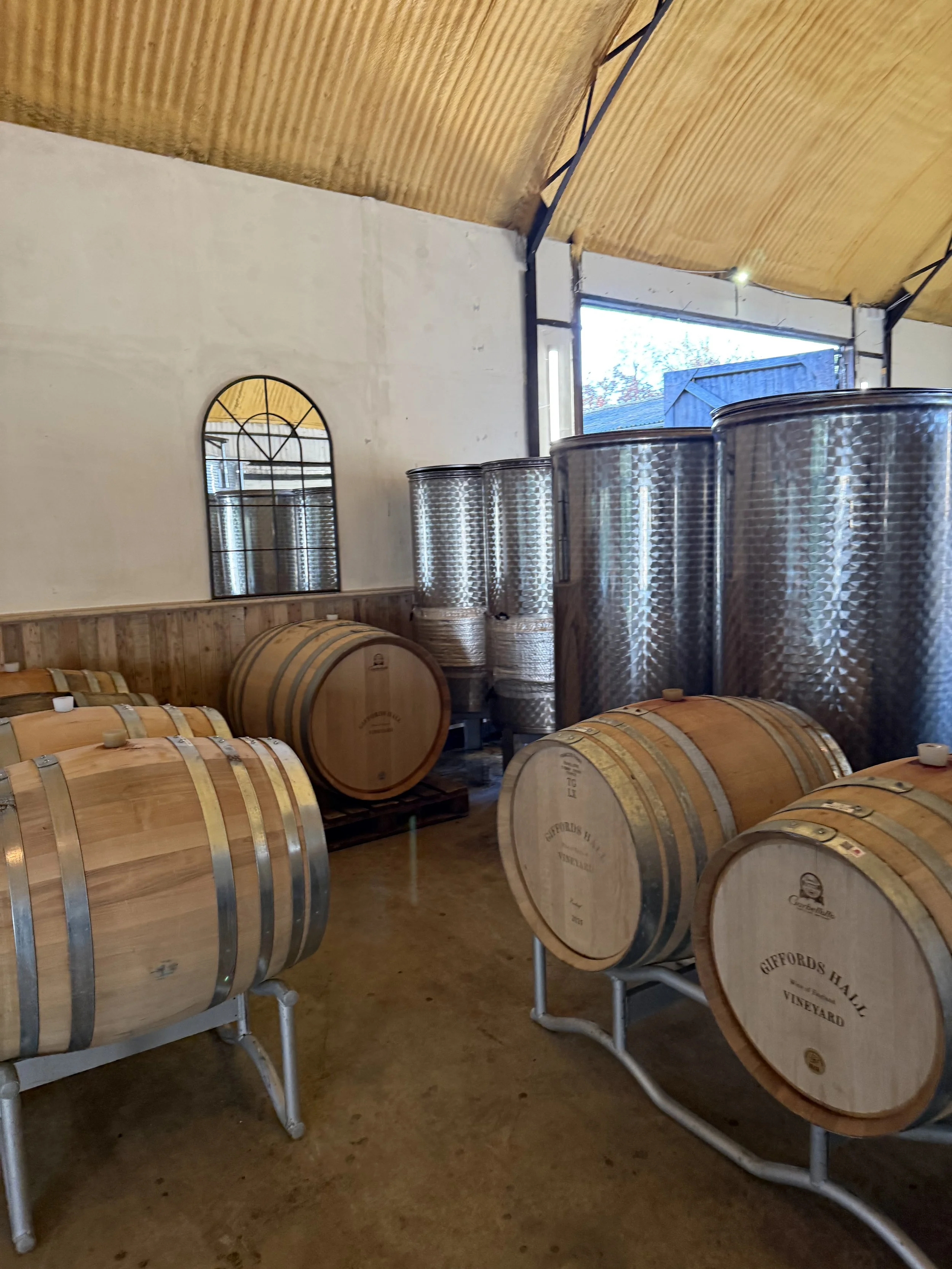
The barrel room at Gifford Hall, beside the stainless steel tanks.
Page 2 of 14Suffolk: T wo Estates, One Question
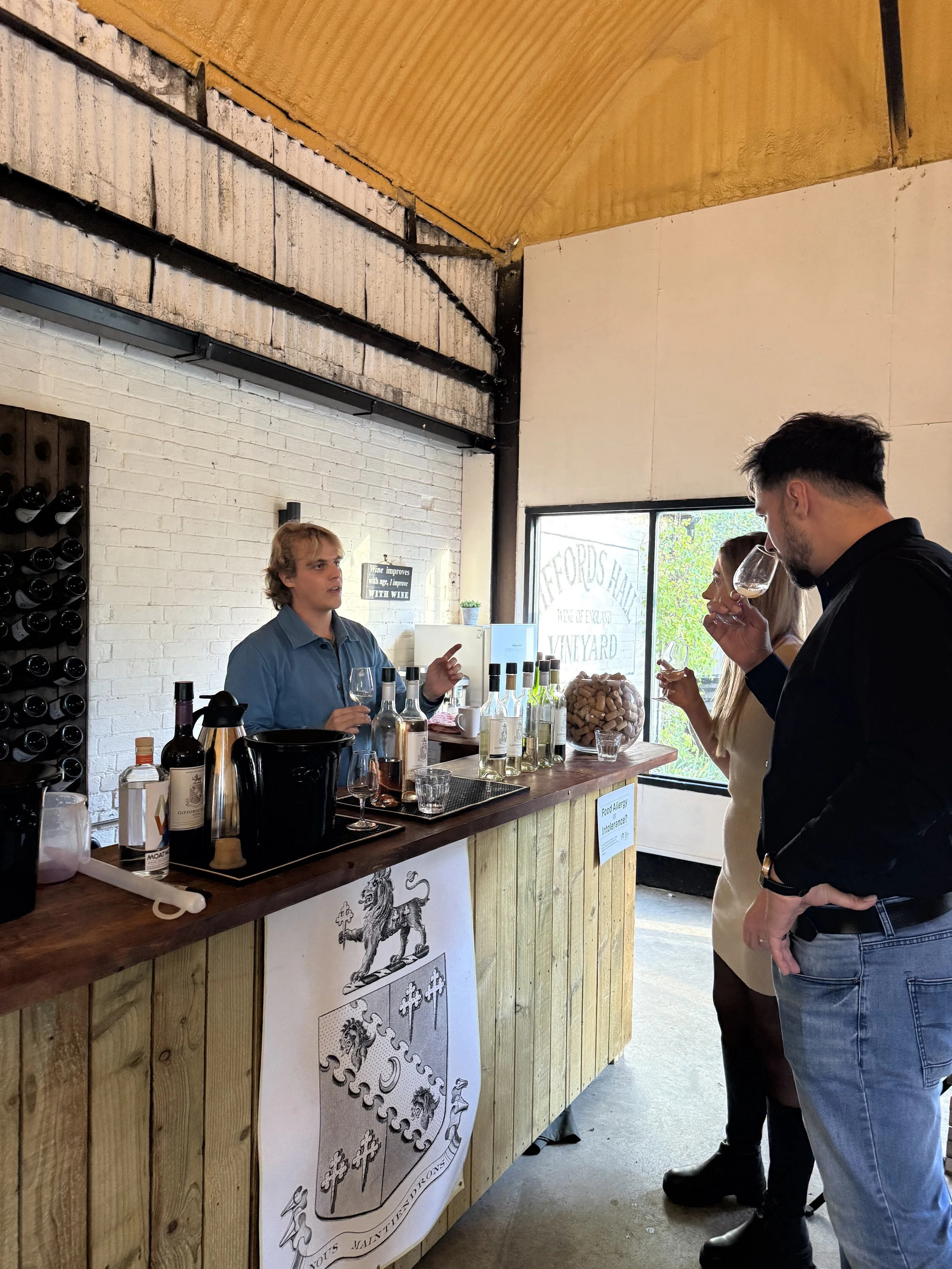
When I explained the article, she sent us straight to join her assistant Henri, who was
leading a tasting for a couple about to launch Crown & Cap, a mobile cheese-and-wine
business. A brilliant idea, and the right company for a tasting.
Page 3 of 14Suffolk: T wo Estates, One Question
Henri leads a tasting in the Gifford Hall tasting room.
We tasted more than ten wines, from Reichensteiner to Rondo, and I was genuinely
impressed by both the range and the quality. On my first visit I could already see
Viktoria's dedication, her hunger to learn and her determination to make the best wine
possible from the grapes she has. This time I was tasting the results of two more years of
that work.
Page 4 of 14Suffolk: T wo Estates, One Question
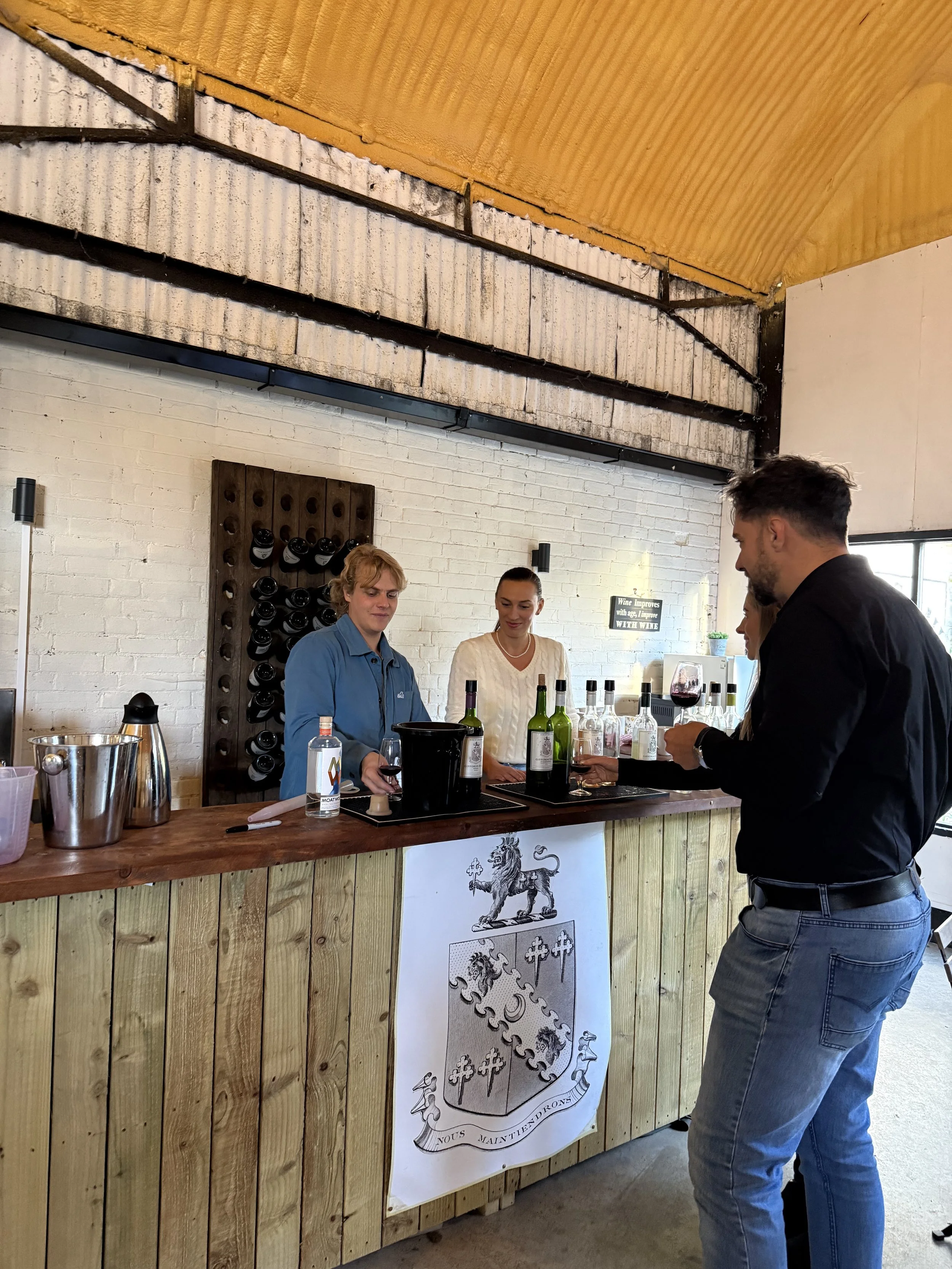
Henri and Viktoria pour the reds.
Page 5 of 14Suffolk: T wo Estates, One Question
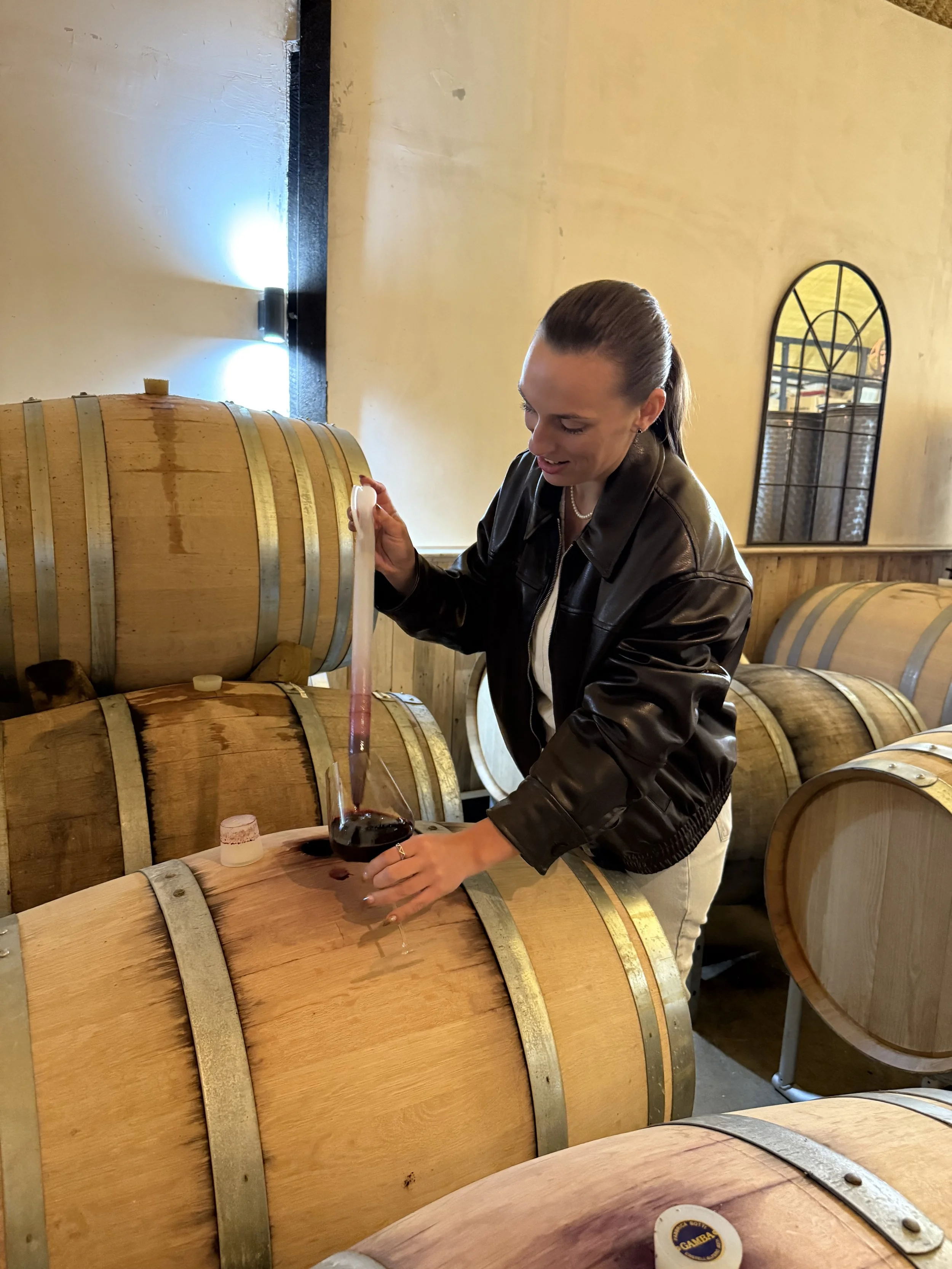
Viktoria joined us later, ready for photographs and the interview, and took us to the
barrels: a Chardonnay in neutral French oak, the 2025 Rondo, and an orange wine. I loved
all three. From everything I saw, she is doing the right things, and I look forward to
following what comes next.
Page 6 of 14Suffolk: T wo Estates, One Question
Viktoria draws a barrel sample of the 2025 Rondo.
Page 7 of 14Suffolk: T wo Estates, One Question
In conversation with Viktoria
What has been your hardest vintage, and what did it teach you?
The season had been beautiful and a good crop looked certain. As she always does,
Viktoria left the grapes hanging longer, chasing the balance of sugar and acidity she looks
for. Then hail destroyed around half of the crop.
At that moment there were two choices: write the grapes off , or find a way to save what
was left. Hail struck the estate's two vineyards differently. Some varieties came through
well, while the thin-skinned grapes were the hardest to sort by hand. They saved what
they could and still made around 1,000 litres of wine she is proud of . The lesson: you
cannot protect yourself from the weather, but you can decide quickly and well.
Is a warmer climate helping, or is the bigger change that the weather is less
predictable?
For Viktoria, unpredictability is the bigger challenge. Y et the warmth is real. This year, she
says, was one of the best harvests England has seen, with Pinot Noir from some vineyards
reaching sugar levels she would once have been told were impossible here. She enjoys the
challenge of working with the grapes, knowing what to expect, and letting good weather
help rather than harm.
Are you planting differently for the next 20 years?
Possibly, though the decision is not hers alone. The estate has more land, and more vines
are planned as part of a new project. Gifford Hall is set to grow.
What one piece of advice would you give someone about to plant a vineyard in
England?
Choose your land with great care. England can be very windy, and most English vineyards
need protecting not only from the weather but from animals and birds. Henri added a
detail few would think of: power lines, which can bring their own trouble with birds.
Gifford Hall's home vineyard is free of them, but one of their other sites is not.
Hawkswood Vineyard: the scientist's vineyard
We arrived at noon on Friday 30 October to find the iron gates shut. A call on the gate
phone, a short wait, and Michael let us in, finishing a phone call as he walked over to greet
us.
Page 8 of 14Suffolk: T wo Estates, One Question
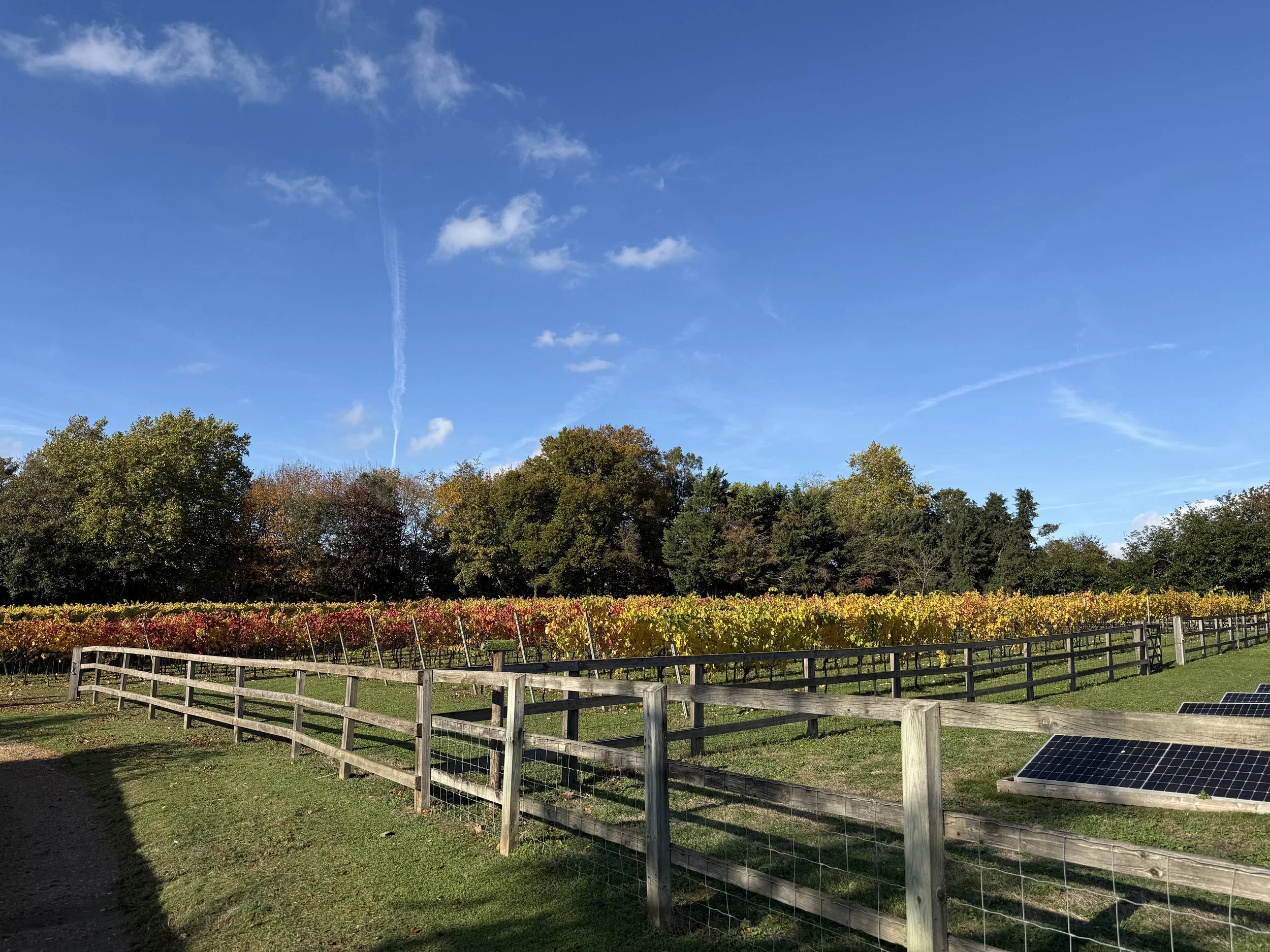
Autumn colour across the Hawkswood vines, with part of the solar array in the foreground.
Michael spent his first career as a doctor, and it shows. He talks about soil, vines and
fermentation with a clinician's precision. He is proud that Hawkswood runs on more than
30 solar panels, and that every task in the vineyard, harvest included, is done by hand. He
does not plough. His spray programme is guided by an agronomist friend who reads what
the vines need through the season and advises accordingly.
Page 9 of 14Suffolk: T wo Estates, One Question
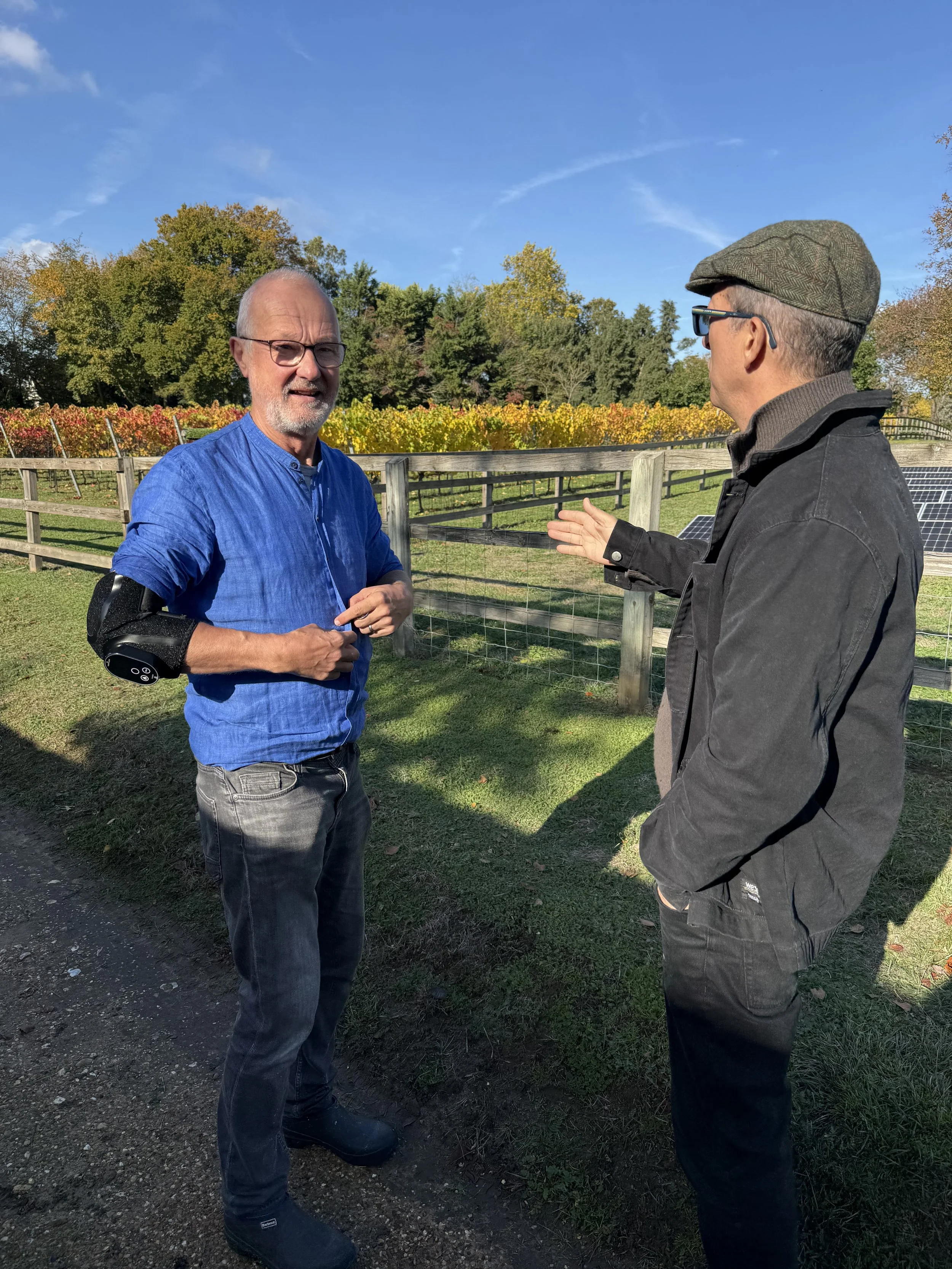
In conversation with Michael beside the vines.
Page 10 of 14Suffolk: T wo Estates, One Question
In the winery, more than six stainless steel tanks stood ready, some already full with the
2026 vintage. We tasted from one of them: young, sweet and still finding itself . Upstairs,
Michael opened bottles and we were joined by his wife Irene and daughter Lily. Irene
brought along the estate's falcon, which patrols the vineyard against birds and other
pests. We left knowing far more about falconry than we expected.
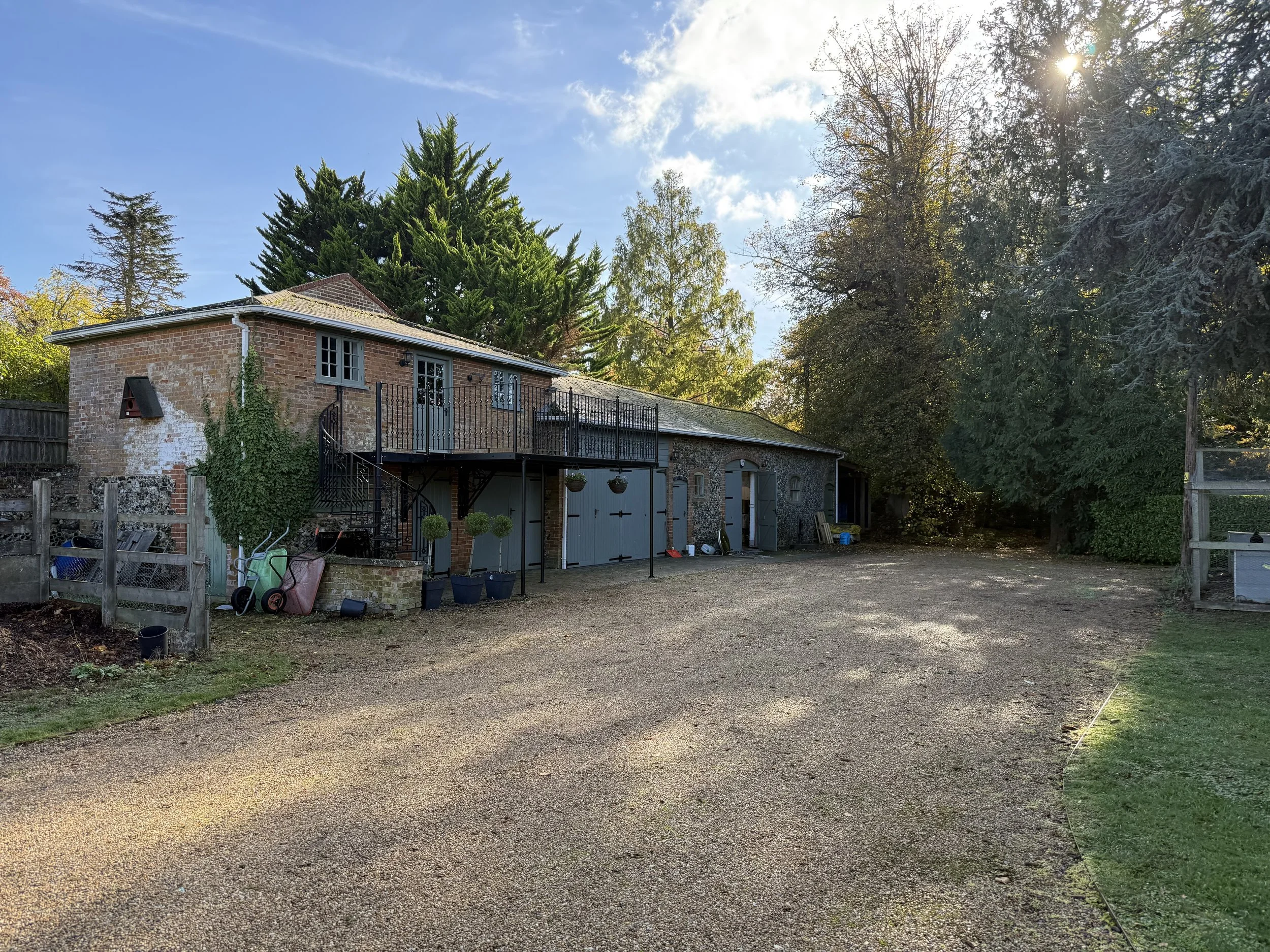
Michael in the winery, with the 2026 vintage in tank.
We tasted five wines: a Solaris, two Bacchus, two Pinot Noir rosés and a Rondo. My
personal favourite was the Solaris. The surprise of the day was a Bacchus that had begun
fermenting on its own, by accident, and which the family wisely chose to leave alone. It
was delicious, and I hope to taste more like it.
Page 11 of 14Suffolk: T wo Estates, One Question
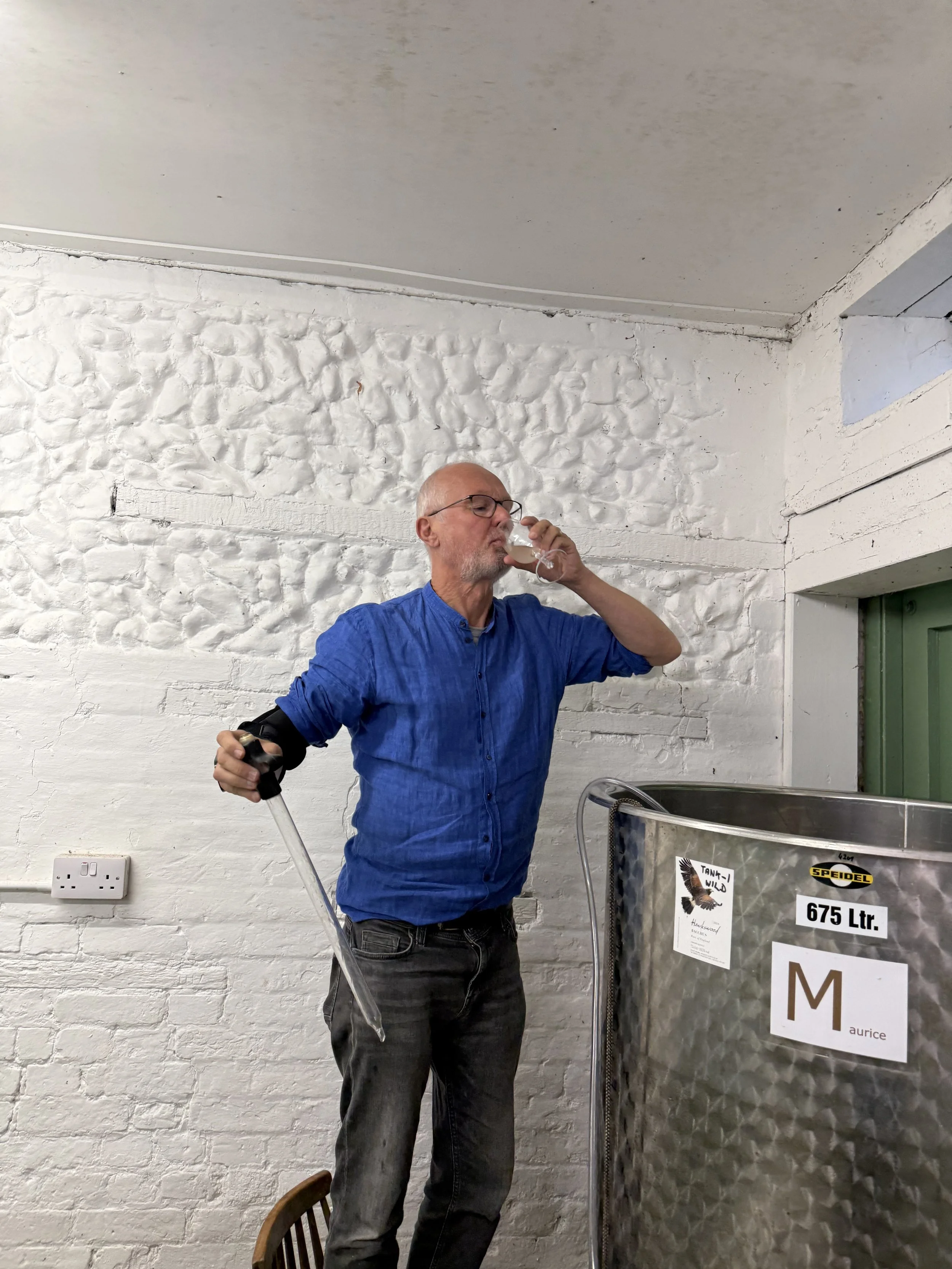
Michael draws a sample from T ank 1, marked "Wild"
.
Page 12 of 14Suffolk: T wo Estates, One Question
In conversation with Michael
What has been your hardest vintage, and what did it teach you?
For Michael, no single vintage stands out. The difficulty is that every year is different.
English summers vary far more than those of continental climates, so you can never plan
when harvest will start or finish. In 2026, after three months of unbroken sunshine, they
picked Solaris on 19 August. In 2024, after a wet July and August, they were still picking at
the end of October.
"No vintage is individually hard, but vintages are hard because you can't plan when
you're going to start and finish harvesting.
"
Is a warmer climate helping, or is the bigger change that the weather is less
predictable?
Like Viktoria, Michael sees unpredictability as the real challenge. 2026 was close to
perfect; if anything, the yield was so high they nearly ran out of tanks. He does not fear a
poor year, because good wine is still possible if you stay flexible. That might mean
chaptalising or deacidifying, which Hawkswood avoids when it can but will do when the
season demands it.
What one piece of advice would you give someone about to plant a vineyard in
England?
His answer was immediate: work out who is going to make your wine. England has more
than 1,200 vineyards but only around 200 wineries. Hawkswood gets calls two or three
times a year from growers who planted three years earlier, now have a crop, and no one to
turn it into wine.
"Before you plant a vineyard, work out who's going to make your wine.
"
Is there a question I should have asked?
Michael turned it back on himself . The question he asks every year is how to make the
best wine humanly possible from this particular piece of land.
What Suffolk taught me
Two estates, two very different philosophies, and the same answer to the central
question: the warmth is welcome, but the unpredictability is the real test. At Gifford Hall,
a perfect season turned in an afternoon of hail. At Hawkswood, harvest has begun as early
as mid-August and run as late as the end of October.
Page 13 of 14Suffolk: T wo Estates, One Question
What struck me most was how both winemakers have made peace with that uncertainty.
Viktoria makes fast decisions and saves what can be saved. Michael keeps every tool
ready and uses as few as the year allows. Both are thinking beyond their own gates, too:
about who will make the wine from England's fast-growing vineyard area, and about
where new vines should, and should not, be planted.
English wine is no longer a curiosity. On the evidence of these two Suffolk estates, it is
being made by people asking exactly the right questions.
My thanks to Viktoria and Henri at Gifford Hall Vineyards, and to Michael, Irene and Lily at
Hawkswood Vineyard, for their time, their wines and their generosity.
Page 14 of 14